Direct Answer
An at-home dementia test is a self-administered cognitive screening you can complete at home to check memory, attention, language, and reasoning. It can flag possible changes that are worth discussing with a clinician, but it cannot diagnose dementia. As the Alzheimer's Association explains, there is no single test that can determine whether a person has Alzheimer's or another dementia; a diagnosis combines cognitive testing with medical history, physical and neurological exams, and sometimes brain imaging or lab work (Alzheimer's Association). Think of an at-home test as a starting point, not a verdict.
What "At-Home Dementia Test" Really Means
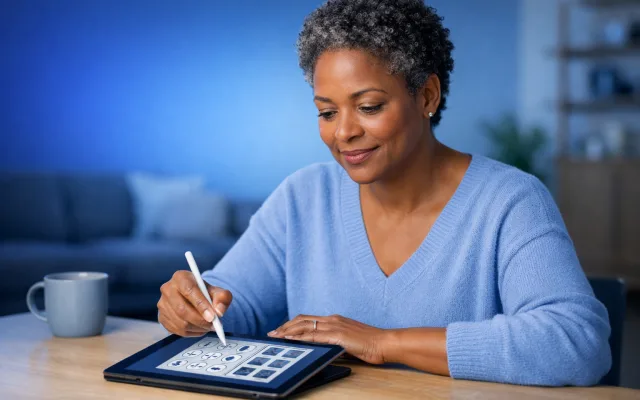
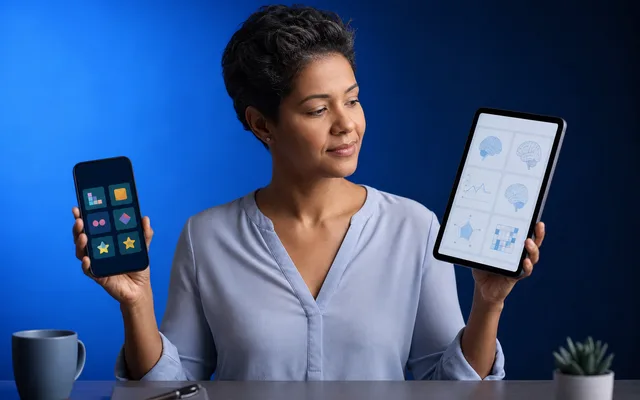
The phrase covers a range of tools, and the differences matter. Some are paper questionnaires you fill out by hand. Others are online quizzes or app-based screens you complete on a phone, tablet, or computer. A smaller group are validated, FDA-cleared digital assessments designed for home use.
What they share is that they are screening tools. Screening is a first pass — a way to sort out who might benefit from a closer look. It is not the same as a diagnosis, which is a clinician's conclusion after weighing many pieces of information. Keeping that distinction in mind helps set realistic expectations before you start.
What an At-Home Dementia Test Can Tell You
Used sensibly, an at-home screen offers real value:
- A prompt to act. A lower-than-expected result can be the nudge someone needs to schedule an appointment rather than waiting and wondering.
- A reference point. A baseline result today makes future changes easier to interpret, especially if you retest under similar conditions.
- A structured conversation starter. Bringing objective results to a doctor can make it easier to describe vague concerns.
- Convenience and privacy. Completing a screen at home, on your own schedule, removes some of the friction that keeps people from getting checked at all.
If you are comparing the available options, our guide to the best at-home cognitive tests walks through how the common formats differ.
What an At-Home Dementia Test Cannot Tell You
Just as important is what a self-test cannot do. It cannot diagnose dementia, and it cannot tell you why a result looks the way it does. The Self-Administered Gerocognitive Exam (SAGE), a widely used at-home screen, is explicit about this: its developers note that SAGE "does not diagnose any specific condition" and that results "will not tell you if you have Alzheimer's disease, mini-strokes or any number of other disorders" (Ohio State University Wexner Medical Center).
Cause matters enormously here, because not every cause of memory trouble is permanent. Mayo Clinic notes that some dementia-like symptoms can be reversed with treatment, including those from infections, metabolic conditions, nutrient deficiencies, medication side effects, and other causes (Mayo Clinic). A self-test cannot distinguish a treatable, reversible cause from a progressive one — only a clinical evaluation can. For a fuller picture of how home tools fit into brain health overall, see our overview of at-home cognitive testing.
How Accurate Are At-Home Dementia Tests?
Accuracy depends heavily on the tool. Well-designed, validated screens can be reasonably good at their actual job — identifying people who should be evaluated further — while a casual online quiz may not be validated at all. Two features separate the trustworthy from the unreliable: whether the test has been studied against clinical standards, and whether it has been cleared or reviewed by regulators.
Results can also shift for reasons that have nothing to do with dementia. Poor sleep, stress, depression, medications, and uncorrected vision or hearing problems can all affect a score on any given day. That is why a single number is never the whole story. We cover this in more depth in our explainer on how accurate at-home cognitive tests are, and on the regulatory side in what makes a cognitive test FDA-cleared.
Warning Signs Worth Paying Attention To
An at-home test is most useful when it is prompted by something you have actually noticed. The Alzheimer's Association describes ten early warning signs of Alzheimer's and dementia, including memory loss that disrupts daily life and new challenges in planning or solving problems, and advises scheduling an appointment with a doctor if you notice any of them in yourself or someone else (Alzheimer's Association). These signs are about change from a person's normal — repeated, progressive shifts, not the occasional misplaced key or forgotten name that everyone experiences.
If you are seeing that kind of pattern, a self-test can help you organize what you are noticing, but it is not a substitute for a conversation with a clinician.
What to Do With Your Results
Whatever the outcome, the next step is the same: share it with a professional. If a screen is reassuring, a doctor can confirm that in context. If it raises a question, that is not a reason to panic — it is a reason to get a proper evaluation. Free and low-cost screens can be a helpful entry point, and our comparison of free tests versus FDA-cleared options can help you decide which fits your situation.
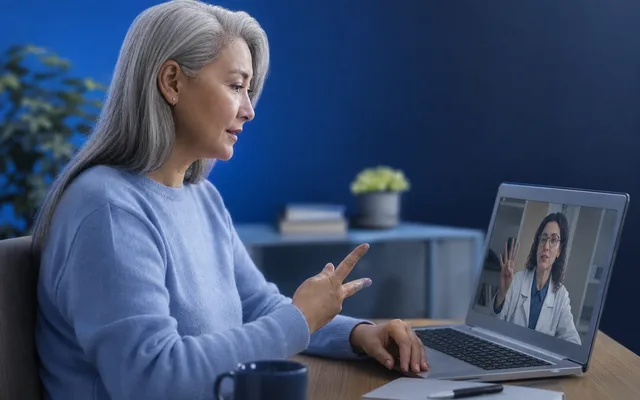
Because there is no single test for dementia, a clinician will combine your result with your history, exams, and sometimes imaging or lab work to reach an accurate conclusion (Alzheimer's Association). That fuller process is what turns a screening flag into real answers — including the possibility that a treatable cause is behind the changes.
Taking the Next Step
To understand how much weight to put on a home result, read our guide on how accurate at-home cognitive tests are.
If you would like a validated, FDA-cleared assessment you can complete at home and share with your doctor, learn how Orena's at-home test works.
Frequently asked questions
Can an at-home dementia test diagnose dementia?
Are at-home dementia tests accurate?
What should I do with my at-home test result?
When should I take an at-home dementia test?
Can dementia symptoms ever be reversed?
Sources
- Medical Tests for Diagnosing Alzheimer's — Alzheimer's Association, 2024
- 10 Early Signs and Symptoms of Alzheimer's and Dementia — Alzheimer's Association, 2024
- Dementia: Symptoms and Causes — Mayo Clinic, 2025
- SAGE: A Test to Detect Signs of Alzheimer's and Dementia — Ohio State University Wexner Medical Center, 2024
Medical disclaimer. This article is for general educational purposes and is not a substitute for professional medical or insurance advice. Orena does not diagnose Alzheimer’s or dementia from a test alone. Always consult your doctor about your specific situation.