Direct Answer
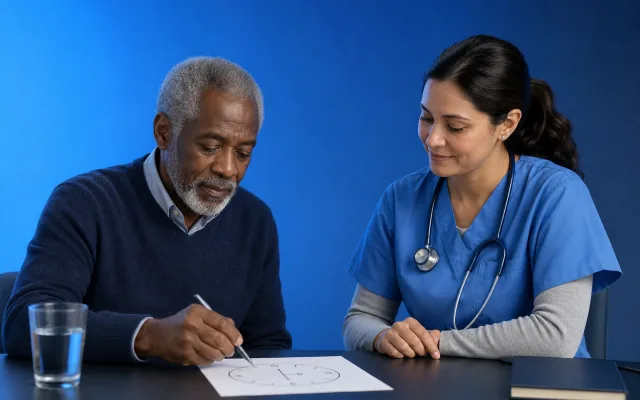
Cognitive testing is a set of standardized assessments that measure memory, attention, language, and problem-solving to identify changes in brain function. It helps families and clinicians understand whether symptoms like forgetfulness or confusion warrant closer evaluation.
- What Is Cognitive Testing?Why Cognitive Testing MattersTypes of Cognitive TestsWhat Cognitive Tests MeasureWhat a Cognitive Test Can (and Cannot) Tell YouCost, Coverage, and AccessHow to Prepare for a Cognitive TestWho Should Consider Cognitive Testing?How At-Home Testing Works with OrenaTaking the Next StepFrequently asked questionsSources
What Is Cognitive Testing?
Cognitive testing refers to a series of standardized assessments designed to evaluate your brain's key functions — including memory, attention, language skills, and executive function. Doctors and neuropsychologists have used these tests for decades to identify early signs of cognitive impairment, Alzheimer's disease, and other forms of dementia.
Traditionally, cognitive testing required a visit to a specialist's office. But today, FDA-cleared at-home options are making it possible for families to take the first step from their living room.
Why Cognitive Testing Matters
Early detection of cognitive changes is one of the most powerful tools families have. Research shows that catching memory decline early leads to:
- Better treatment outcomes — New medications work best when started early
- More time to plan — Families can make legal, financial, and care decisions together
- Access to clinical trials — Early-stage patients qualify for more research studies
- Peace of mind — Many people who worry about memory loss are actually fine
According to the Alzheimer's Association, more than 6 million Americans are living with Alzheimer's disease, yet fewer than half of people with cognitive impairment ever receive a formal assessment.
Types of Cognitive Tests
Brief Screening Tools
Short assessments like the Mini-Mental State Examination (MMSE) or Montreal Cognitive Assessment (MoCA) take 10–15 minutes and provide a quick snapshot of cognitive function.
Comprehensive Neuropsychological Testing
Full batteries of tests administered by a neuropsychologist over several hours. These provide detailed profiles of strengths and weaknesses across multiple cognitive domains. To understand when a full evaluation is needed versus a brief screening, see cognitive testing vs. neuropsychological evaluation.
At-Home Digital Assessments
FDA-cleared tools like Orena bring validated cognitive testing to your home. These digital assessments use the same scientific principles as clinical tests but are designed for ease of use. For a broader look at how at-home options compare to clinical tools, see our guide to at-home cognitive testing.
What Cognitive Tests Measure
Most cognitive tests look at several core abilities. Memory tasks check how well you learn new information and recall it later. Attention and processing speed tasks measure how quickly you can focus, switch tasks, or follow instructions. Language tasks look at naming, word-finding, and comprehension. Executive function tasks assess planning, reasoning, and problem-solving.
These domains map to everyday experiences. For example, difficulty managing bills or following a recipe can reflect changes in executive function. Trouble recalling recent conversations can point to memory changes. Testing helps translate those daily concerns into objective measures that clinicians can track over time.
What a Cognitive Test Can (and Cannot) Tell You
Cognitive testing is a starting point, not a diagnosis. A single test does not determine whether someone has Alzheimer’s disease or another condition. Instead, it helps identify patterns that may warrant additional evaluation, such as medical exams, lab work, or imaging.
It also provides a baseline. Having a documented starting point makes it easier to notice small changes later. That’s especially helpful for adults who want to be proactive about brain health or caregivers who need clarity about a loved one’s symptoms. For a comprehensive overview of the testing landscape — types, timing, and what to expect — the cognitive testing pillar is a useful companion.
Cost, Coverage, and Access
The U.S. Preventive Services Task Force recognizes the importance of cognitive assessment in older adults. Many people receive a brief cognitive assessment during a Medicare Annual Wellness Visit, and additional evaluations may be covered depending on your plan and physician recommendations. Coverage can vary, so it’s wise to ask your provider what’s included before scheduling a longer neuropsychological evaluation.
At-home options can reduce barriers like travel time, scheduling delays, or discomfort with in-clinic testing. While at-home testing isn’t a replacement for a full diagnostic workup, it can help families take the first step and prepare for a more informed conversation with a clinician.
How to Prepare for a Cognitive Test
You don’t need to study, but you can set yourself up for a clear result. For a complete preparation checklist, see our guide on how to prepare for cognitive testing. Get a good night’s sleep, bring any hearing aids or glasses you use, and have a list of medications ready. If a family member has noticed changes, ask them to attend the appointment or share their observations ahead of time.
It also helps to write down specific examples of memory concerns, such as missed appointments or repeated questions. Concrete examples give clinicians better context and help ensure the right next steps are recommended. Guidance from the National Institute on Aging supports integrating brief cognitive assessment into routine primary care for older adults.
Who Should Consider Cognitive Testing?
You or a loved one should consider cognitive testing if:
- You're over 55 and want a baseline measurement
- You've noticed changes in memory, word-finding, or decision-making
- Family members have expressed concern about cognitive changes
- There's a family history of Alzheimer's disease or dementia
- You want to take advantage of Medicare's Annual Wellness Visit cognitive screening
Even mild changes are worth discussing, especially if they affect daily routines. Early conversations can reduce uncertainty and help families feel more prepared, whether results show normal aging or a need for follow-up. For a detailed look at the specific groups that benefit most, see our guide on who should get cognitive testing.
How At-Home Testing Works with Orena
Orena's at-home cognitive test is designed to remove barriers to early detection:
- Order online — The test kit ships directly to your door
- Complete at home — Follow simple instructions at your own pace
- Get results — Receive a detailed cognitive health report
- Share with your doctor — Use your results to have an informed conversation with your healthcare provider
The entire process is designed to be comfortable, private, and stress-free — no clinic visit required.
Taking the Next Step
If you are concerned about memory changes — whether for yourself or a loved one — cognitive testing is a practical first step that provides objective data to guide conversations with healthcare providers. If name recall is your main concern, start with is forgetting names normal as you age.
If you're ready to see what a structured assessment looks like, explore how Orena's FDA-cleared at-home test works.
Frequently asked questions
What is cognitive testing?
Can I do cognitive testing at home?
How long does a cognitive test take?
Who should consider cognitive testing?
Is cognitive testing covered by Medicare?
Sources
- 2024 Alzheimer's Disease Facts and Figures — Alzheimer's Association, 2024
- Screening for Cognitive Impairment in Older Adults — U.S. Preventive Services Task Force, 2020
- Assessing Cognitive Impairment in Older Patients — National Institute on Aging, 2023
Medical disclaimer. This article is for general educational purposes and is not a substitute for professional medical or insurance advice. Orena does not diagnose Alzheimer’s or dementia from a test alone. Always consult your doctor about your specific situation.